
Player development
Every player gets a development record that compounds.
Coaching feedback usually evaporates the moment practice ends. Coach Sidekick turns it into a structured record for every player: what their coach noticed, drills matched to it, and progress tracked over time against a real skill taxonomy. Development you can actually see.
The digest
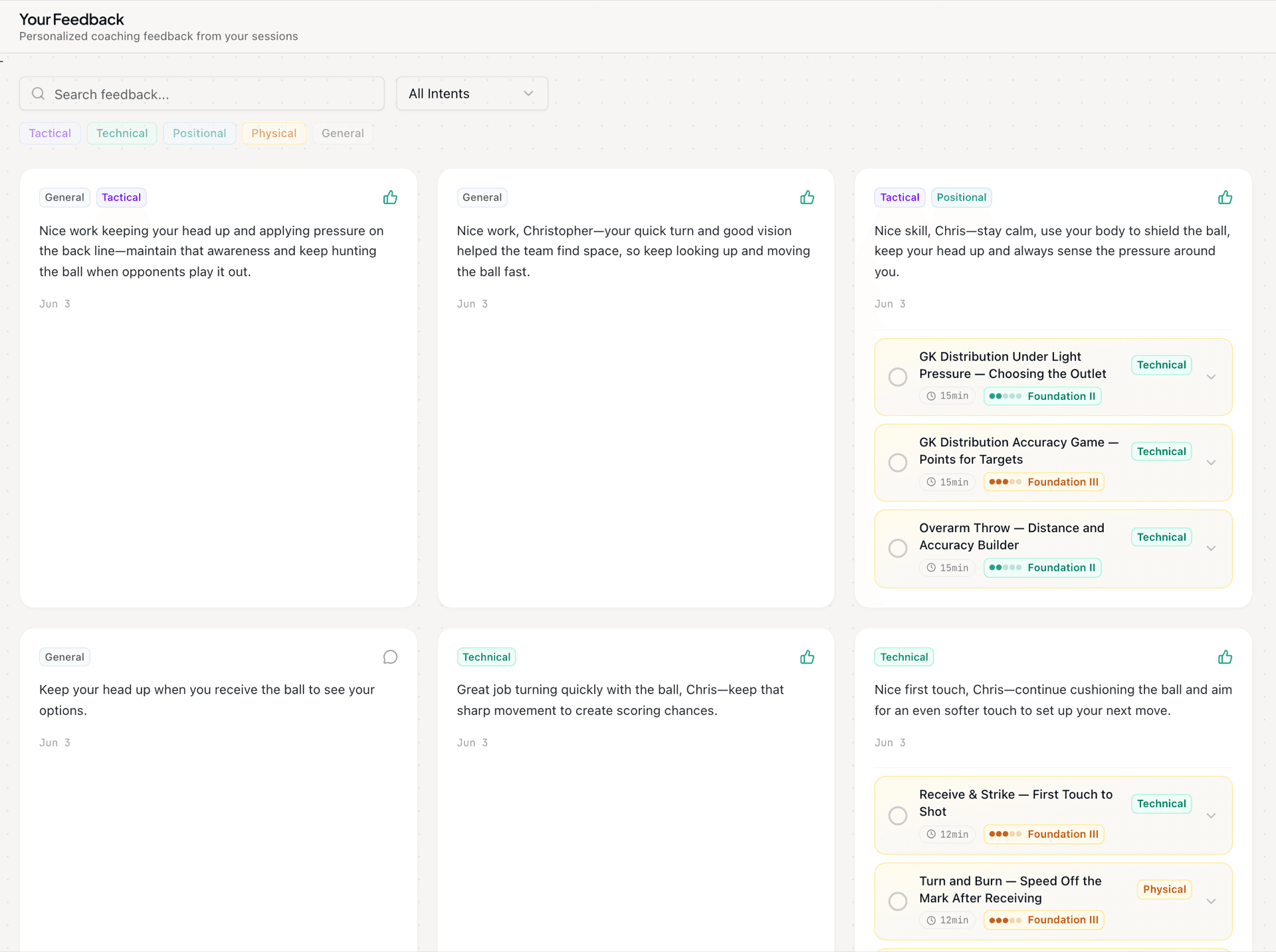
Feedback in your coach's words, after every session.
Once your coach reviews and approves, the moment lands in a personalized digest: what they noticed, in their words, organized by type. Not a generic report card. The actual coaching, written down and addressed to one player.
Matched drills
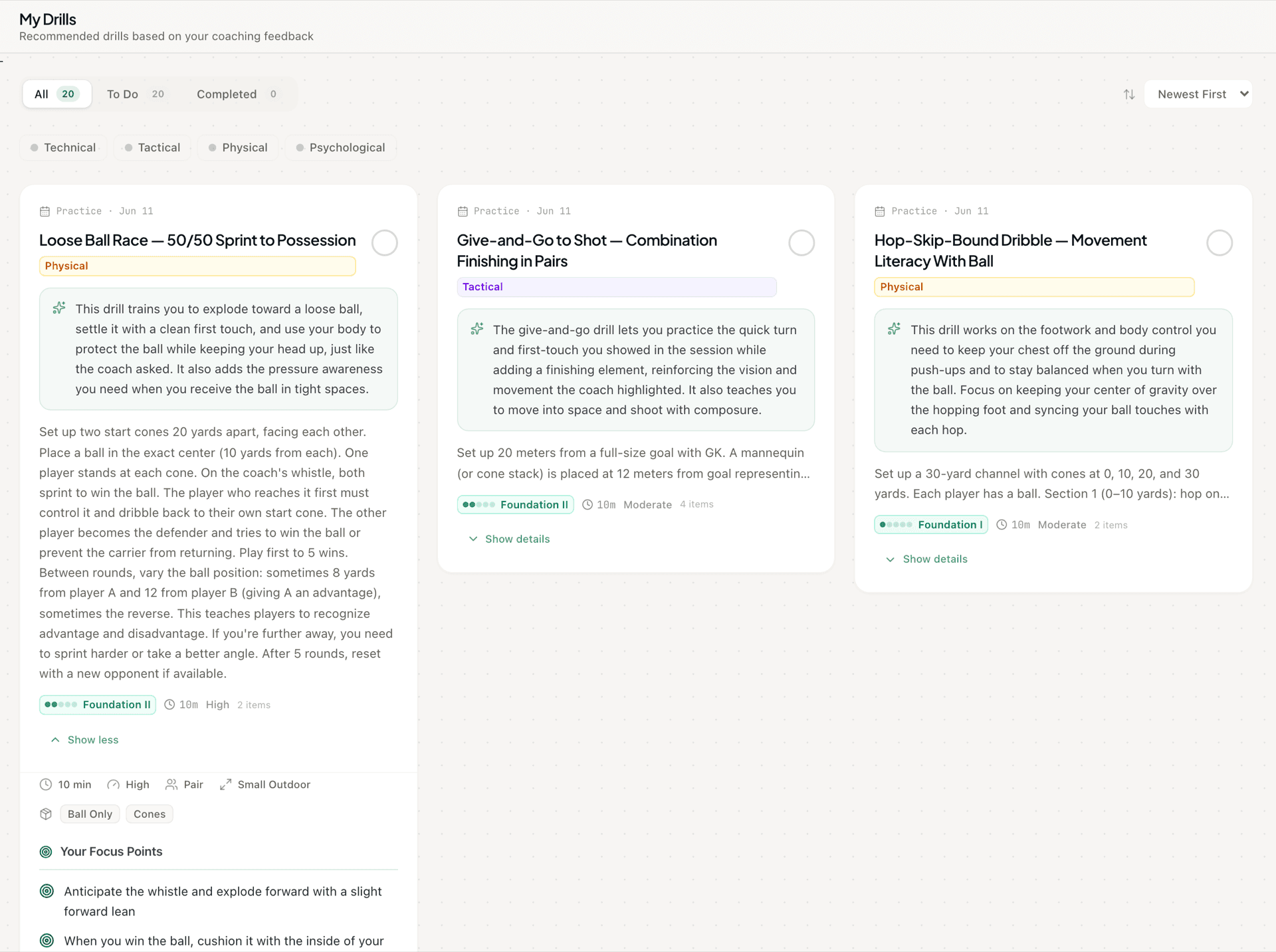
Every note comes with a way to work on it.
Each piece of feedback arrives with a drill matched to the exact skill behind it, plus focus points and coaching tips. The player always has a clear next step, not just words of encouragement.
The development record
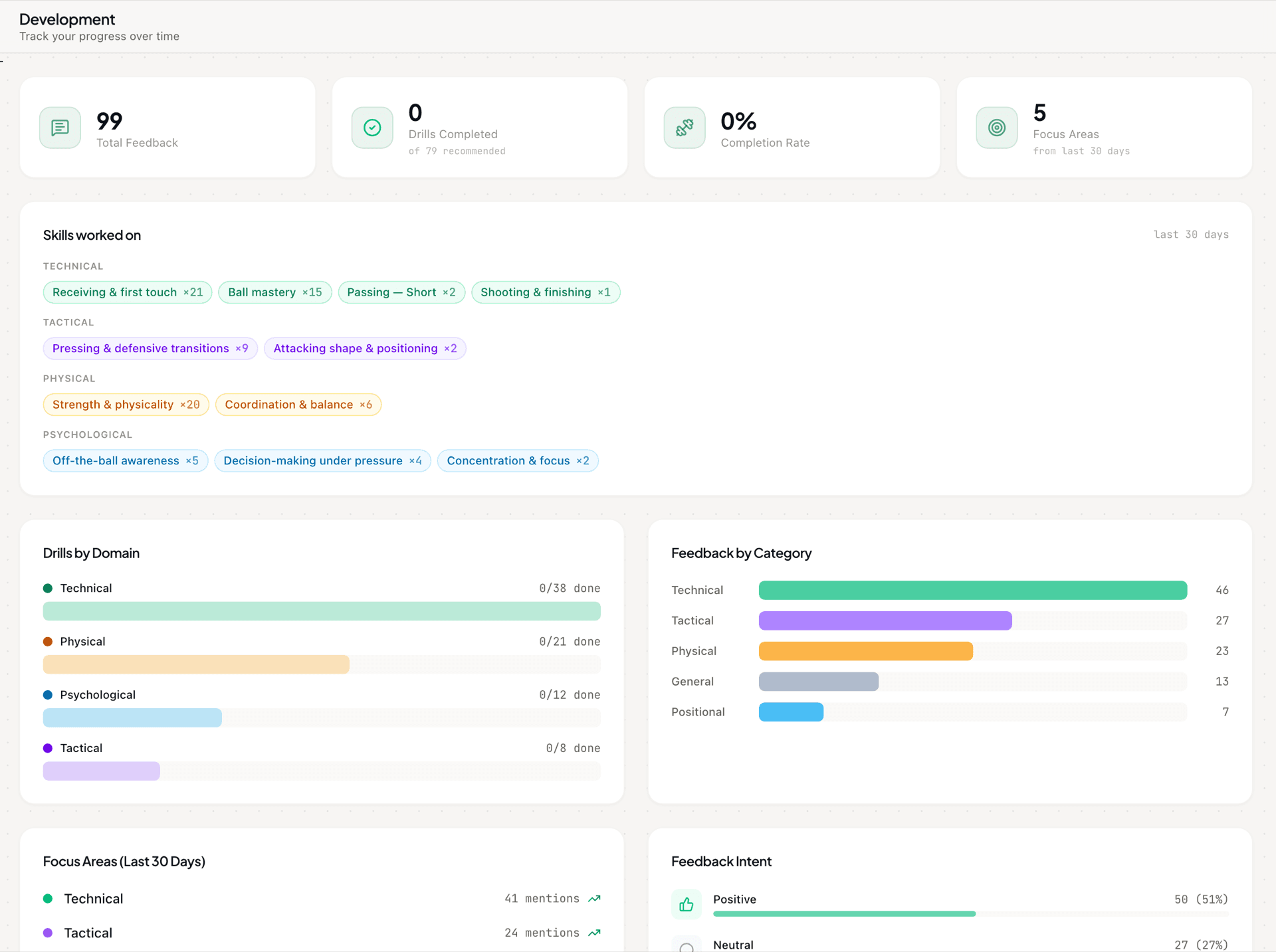
Watch a player's growth build, session by session.
Total feedback, drills completed, the skills worked on, and how focus areas shift over time, all tracked against the same skill taxonomy the rest of the platform runs on. A longitudinal record of how a player is actually developing, not a vibe.
How it works
The loop that makes the next session sharper.
Feedback reaches the player
The coach's approved feedback lands in the player's digest with matched drills and focus points to work on before the next session.
The player acts and logs it
The player works the drills, checks off focus points, and adds notes on how it went. Their coach sees all of it.
The next session gets sharper
The coach arrives knowing what landed and what didn't. Feedback builds on itself instead of resetting every week.

Between sessions
Progress lives in the reps no one's watching.
Players retain only 57% of what their coach tells them in a session.
In a study of 342 youth soccer players ages 10 to 18, players remembered an average of 57% of their coach's feedback, and in 65% of feedback moments the message did not fully land (Januário et al., 2016). A written development record is how the other 43% stops disappearing.
Questions about the development record
- What exactly is in a player's development record?
- Their full feedback history, the drills matched to it and which ones they completed, the skills they've worked on, and how their focus areas and feedback categories trend over time. All of it is built from the feedback a coach approved, nothing else.
- How does logging drills make the feedback better?
- It closes the loop. When a player marks a drill done or adds a note on how it went, the coach sees it. So the next session's feedback can build on what the player actually worked on, instead of starting from scratch. That is the whole point: feedback that compounds.
- Is the record tied to the same skills the drills use?
- Yes. A player's skills-worked-on, their matched drills, and the coach's analytics all resolve to one shared skill taxonomy, the same one behind the drill library. So a note, a drill, and a trend line all speak the same language.
- Who can see a player's development record?
- The player, their coach and director, and any parent or guardian linked through the academy. It is private to that circle. There is no shared feed across families and no ranking of one player against another.
More questions? support@coachsidekick.ai
Give every player a development story, not just a schedule.
We're building Coach Sidekick with a small group of founding academies. Every player on the roster gets their own development record.